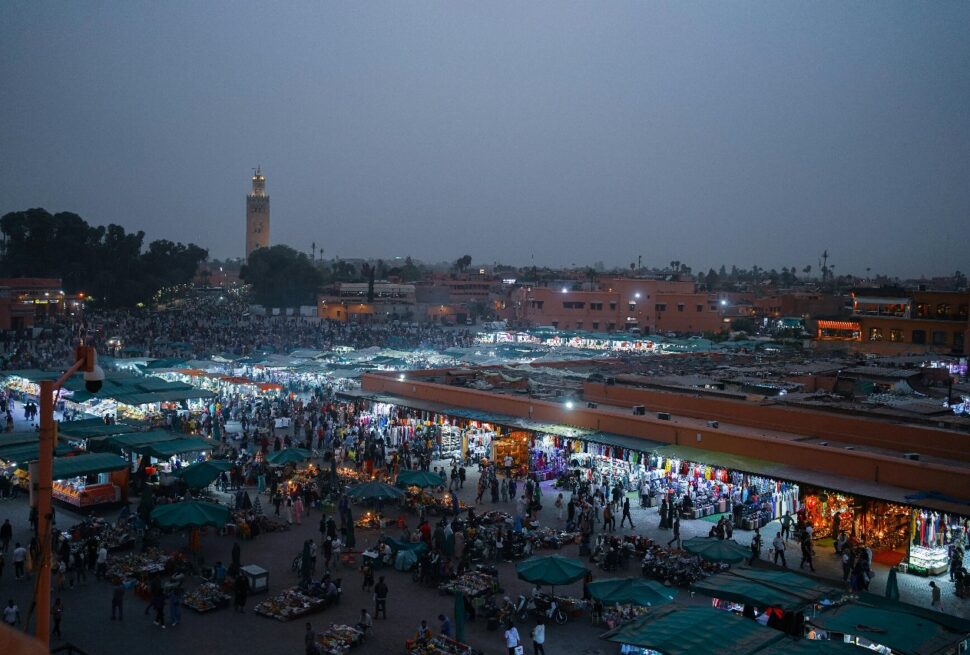

Curious which base will shape your trip most? Imagine a courtyard where tiled walls catch golden light, or a desert lodge that hushes the world at night. Which setting will make your experience feel authentic and restful? In this guide to Where to stay in Morocco, you’ll get a clear overview of the main types of places. Historic riads and dars sit inside medinas, while modern hotels and mountain lodges offer a different pace. This helps match your goals with the right base.
Sample choices show the range. Berber Lodge near Marrakesh offers a walled garden and pool. Dar Seffarine in Fez feels historic and calm. Riad Dar-K blends Moroccan craft with Scandinavian simplicity. Riad Sephora at Tinghir is budget-friendly with gorge views. By the end, you’ll know where each option shines and how regional culture and design shape comfort. Use this short guide to plan your time wisely and pick the city or landscape that fits your world-ready curiosity.
How to Choose the Right Place for Your Trip
Pick a base that fits how you plan each day, not just the price tag. This short guide helps you match itinerary, comfort, and logistics so each morning feels easier and each evening restores energy.
Match your itinerary to location
Map your day plans to the right area: the medina for souks and history, the High Atlas for slow life and views, the Sahara for starry nights, and the coast for gentle pacing.
Marrakesh’s medina neighborhoods differ by vibe. Kasbah is quieter near Saadian Tombs, Mouassine feels stylish and central, Bab Doukkala gives a local pulse near Majorelle, and the Mellah sits near Bahia Palace.
Balance experience, budget, and comfort
If you walk everywhere, a central medina place makes sense. For longer stays or work, Gueliz offers cafés, gyms, and apartment-style rentals. For desert trips, plan long drives and break the way at Tinghir or the Todgha Gorge.
Practical tip: I highly recommend grouping nights by region to avoid backtracking. Solo women often prefer central spots with clear taxi directions and attentive staff.
Understanding Morocco’s Stays
Decide whether you crave an inner garden, a mountain terrace, or a star-lit tent. That choice shapes mornings, evenings, and how you move each day.
Riad vs. Dar
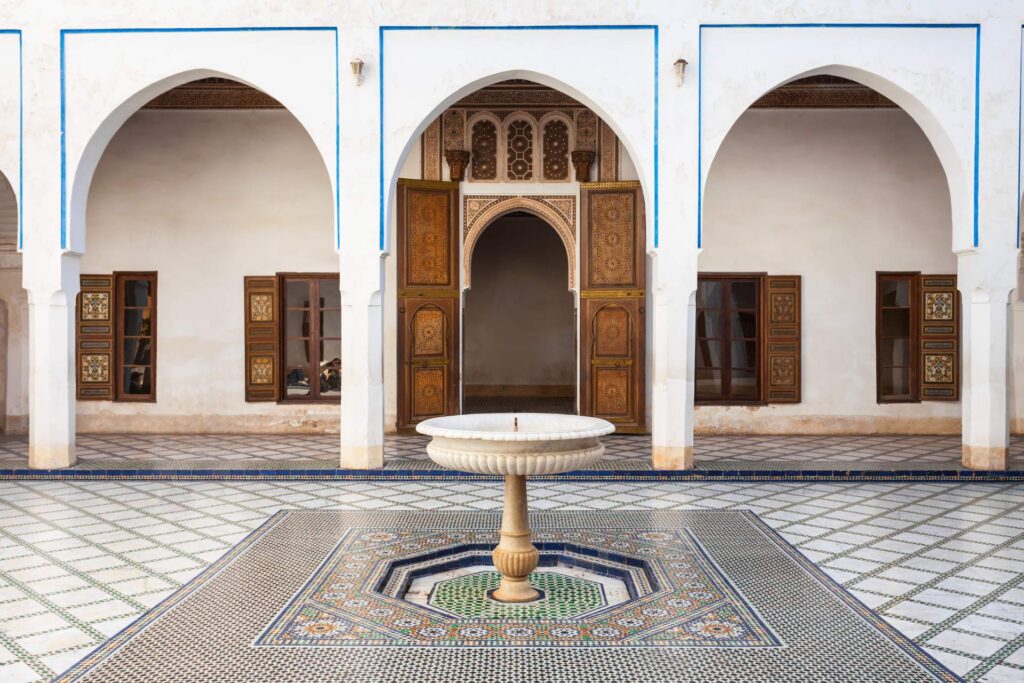
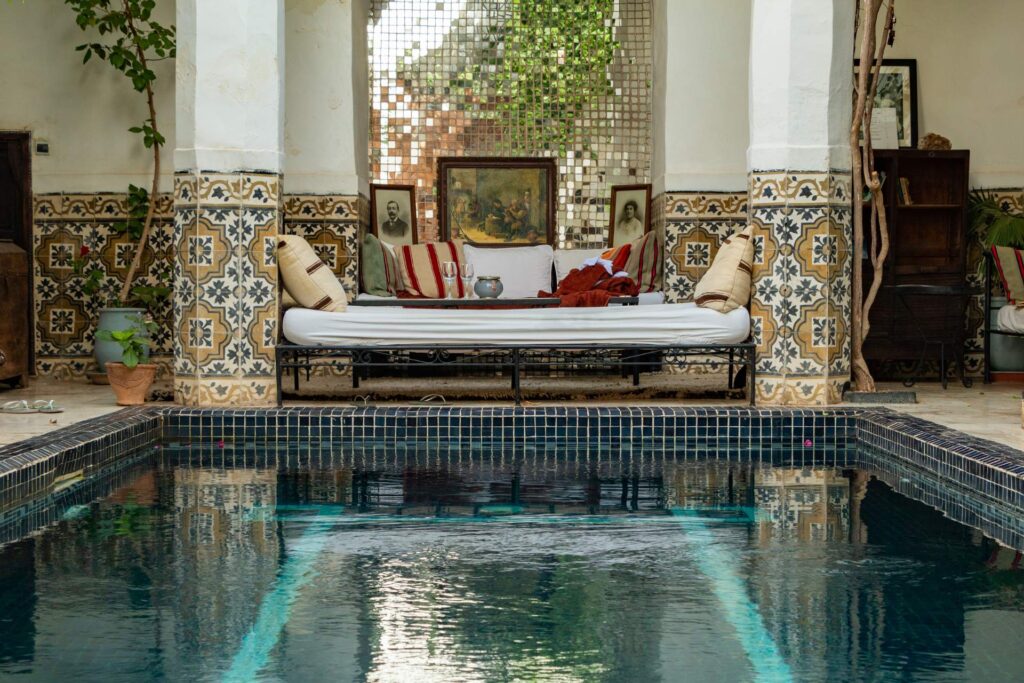
Riads usually center on a tiled courtyard with fountains, citrus trees, and shaded seating. Dars are similar historic homes but often lack a central courtyard. Both immerse you in local culture and layered architecture.
Examples help: Riad Dar-K in Marrakesh pairs minimal design with a plunge pool and terrace breakfast. Dar Seffarine in Fes shows carved plaster, cedar doors, and zellij, with dinner on request and breakfast included.
City hotels and apart-hotels
Choose a modern hotel when you want larger rooms, steady Wi‑Fi, easy transfers, and quick access to cafés and shopping. Hotels and apart-hotels simplify logistics on busy itineraries.
Berber lodges and mountain retreats
Mountain lodges favor natural materials, terraces, and garden-to-table menus. Berber Lodge near Marrakesh has nine lodges, a 20m pool, and activities like weaving and horse riding. These places encourage slow days and long views.
Merzouga desert camps
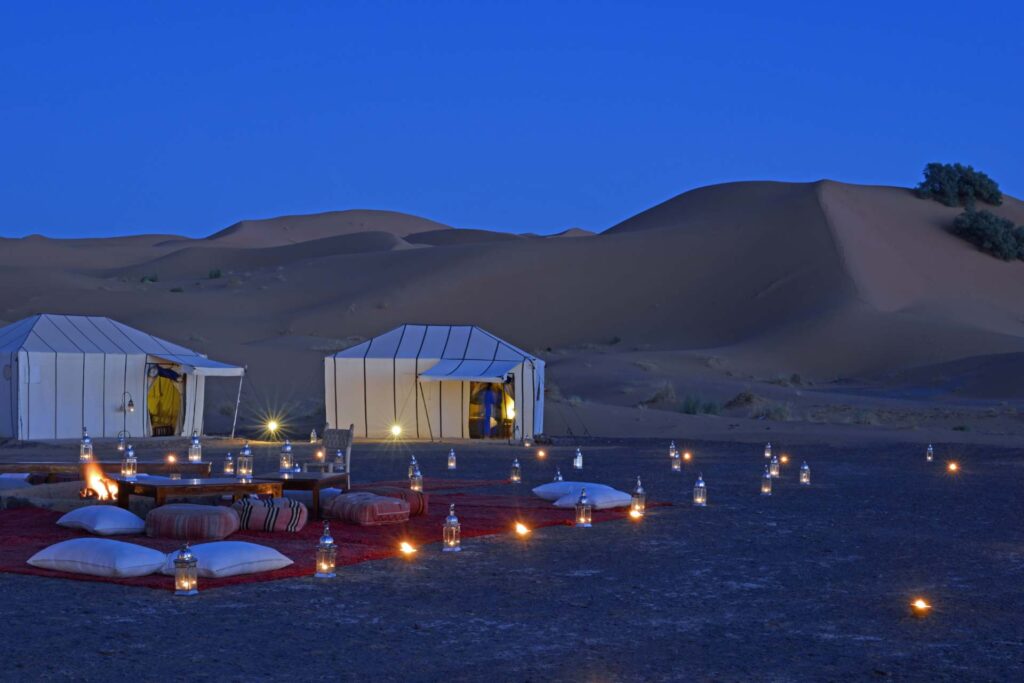
Luxury desert camps offer camel treks, comfortable tents, hot showers and dinner under clear skies. This blend of comfort and silence makes the desert a once-in-a-lifetime experience.
Tip: Pick your place by how you like to spend mornings and evenings—courtyard tea, terrace breakfast, or easy walks to restaurants will define your trip.
Where to stay in Morocco
Let your daily rhythm guide which part of the city becomes your home base. For first-timers, a medina riad within easy walking distance of food and souks puts you in the heart of local life. Pick Kasbah or Mellah if quiet nights matter. Choose Mouassine for design-forward rooms and lively access to markets.
Central medina riads near food, souks, and history
The best riads let you step out for breakfast, explore by foot, then return for a soft evening. Look for clear taxi directions and staff who help plan short walks. Staying central saves time and makes the old streets part of your trip.
Design lovers
If interiors matter, seek curated spaces with a rooftop for sunsets and a private terrace or small pool for cooling off. Mouassine and Bab Doukkala often host properties with that refined mix of craft, comfort, and modern details.
Digital nomads & longer stays
For longer visits, Gueliz offers reliable Wi‑Fi cafés, gyms, and apartment-style rentals. Airport transfers and smoother taxi runs make daily life easier while still keeping the medina a short ride away.
Quick guide: match pace with place—central for fast access to sights, or near the edge for calmer nights. Balance a lovely rooftop and pool with a good night’s sleep; that rest fuels your next day of discovery.
Marrakesh Neighborhoods and Riads
Marrakesh’s medina unwraps distinct pockets of character, each guiding how your days feel. Pick an area that fits your rhythm and you’ll spend mornings and evenings in places that suit you.
Kasbah
Base in Kasbah for a quieter city feel near major sights like the Saadian Tombs and El Badi Palace. Many boutique riads hide behind modest doors here. Expect calm nights and handy access to small museums and courtyards.
Mouassine
Choose Mouassine for a stylish, central vibe close to Le Jardin Secret and busy souks. This area suits design-minded travelers who want quick shopping and curated riads with rooftop views.
Bab Doukkala
Bab Doukkala offers a local atmosphere near Majorelle Garden and the New City. Streets feel more residential, and you’ll find larger hotels and quieter evenings after day trips.
Mellah (Jewish Quarter)
The Mellah brings quieter nights and short walks to Bahia Palace and Tinsmiths Square. It’s a good pick if you want evening calm while staying within easy reach of markets.
Gorgeous riads and practical tips
Bookmark standout riads such as Ksar Fawz & Spa, Kasbah & Spa, Chez Henriette, Roca, Albaraka, and Riad BE for curated design and comfort. Aim for a rooftop where you can linger over dinner or breakfast. Many riads serve in-house meals and match local hospitality with consistent service.
Note: Expect the call prayer at dawn and sundown; pack earplugs if you’re light-sensitive. Confirm rooftop access and breakfast timing with hotels or riads before booking.
Fes Stays for Culture Seekers
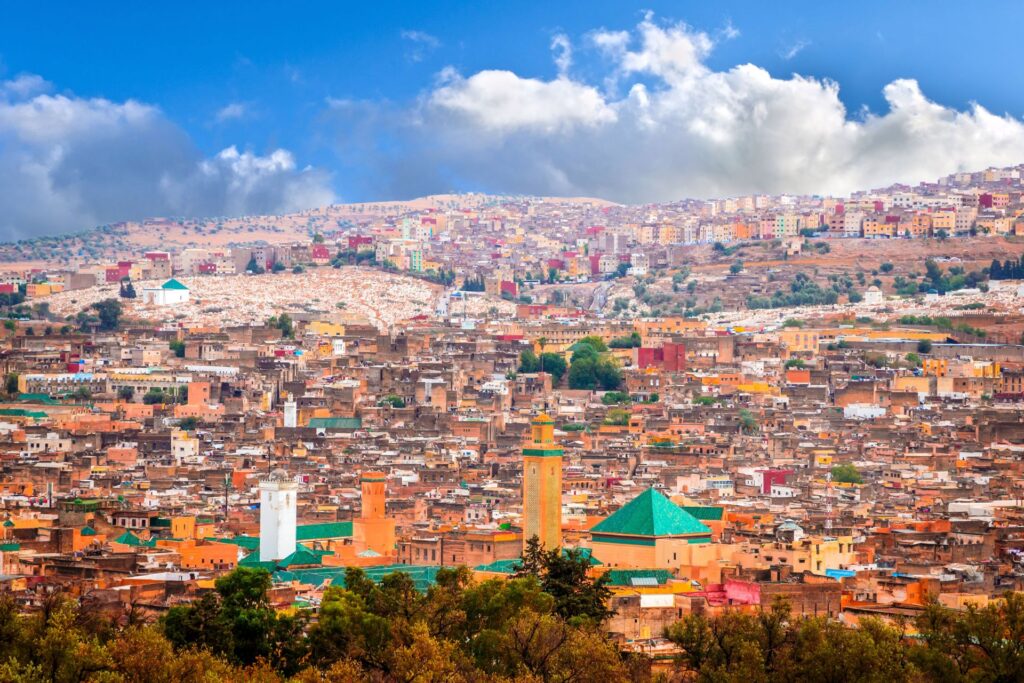
Fez rewards quiet mornings and curious footsteps with hidden courtyards and rooftop views. Pick a lodging that puts you near lively gates and narrow lanes so the medina’s pulse becomes part of your day.
Dar Seffarine’s craft and calm
Dar Seffarine showcases soaring columns, carved plasterwork, traditional zellij, and cedar doors. Rooms face an inward, light-filled courtyard where mornings feel private and gentle.
On the rooftop you can buy wine and enjoy open views over the maze below. This dar blends thoughtful details with authentic charm.
Medina logistics
The medina is famously vast—often called 10,000 streets—so book close to a main gate or a key sight for easier arrivals. Ask your host about simple directions and set a meeting point for taxis.
Arrange a local guide for your first wander. A short orientation saves time and helps you find favorite cafés and tucked-away workshops.
Soundscape and services
The city’s sound carries through thick walls; the call prayer is part of daily life and can reach even quiet rooms. Pack earplugs if you are light-sensitive so sleep stays restful.
Hotels and guesthouses differ in services like laundry or meal options. Confirm that breakfast is included and ask if dinner can be prepared from market ingredients before you reserve.
Atlas Mountains Retreats
Olive groves and cool air change how mornings feel after city heat. At Berber Lodge (Douar Oumnes, near Marrakesh) nine individually styled lodges use terracotta tiles, timber beams, and sandblasted walls that link design with landscape.
The grounds include walled gardens, communal lounges, a treatment room for massages, and a 20m pool. Walk garden paths, read on a shaded terrace, or linger with a slow cup of tea.
Activities from your lodge
Book a weaving class or a gentle horse ride through nearby trails. The restaurant serves breakfast, lunch, and a set-menu dinner sourced from the garden and trusted farmers. Cocktails and French wines are available across the property.
High Atlas day trips vs. overnights
The high atlas location makes overnights easy and starry skies rewarding. Choose day trips if you prefer a single base; pick overnights for quiet mornings and slow life.
Practical tip: Confirm seasonal pool use, meal times, and transfers before arrival so your mountain chapter starts calmly and the warm hospitality feels seamless.
Desert & Gorge Overnights
Drive past ochre villages and stop where the landscape changes. Break long legs of your trip with an overnight that gives you both rest and local color. A short stop here makes the next day easier and safer.
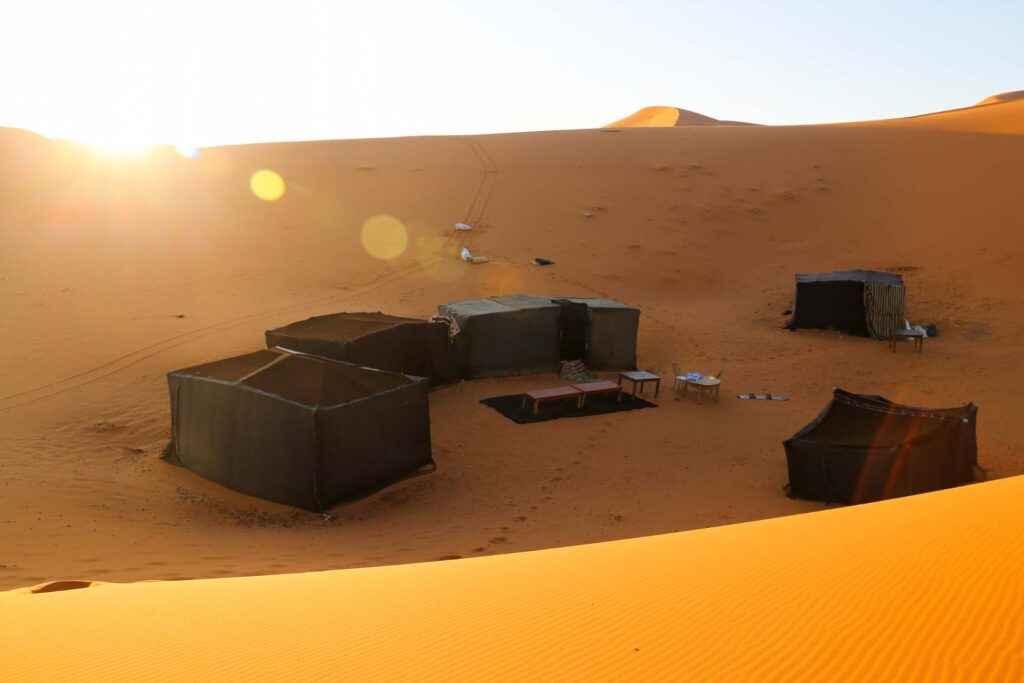
Merzouga luxury tents
In Merzouga, luxury camps blend comfort and silence. Expect camel treks at sunrise, comfortable tents with hot water for showers, and dinner around a fire beneath a wide sky.
Tip: Add a day activity like sandboarding or an ATV ride if you want more adrenaline between dawn and dusk.
Tinghir’s Riad Sephora
Tinghir makes a practical town stop. Riad Sephora (from £23) offers simple rooms, balcony breakfasts with river views, and in-house dinner because options are limited after nightfall.
Breaking up long drives
Plan your route so you arrive at a calm place before dark. Confirm camel pickup times and return plans, and make sure camps include hot water after a dusty day.
Pack layers for cold dusk and early dawn. Pick your overnight based on morning aims—an early gorge walk or a relaxed coffee before crossing the High Atlas will shape the rest of your journey.
Coastal and Capital City Bases
A seaside base tunes your trip toward gentle evenings and sweeping Atlantic light. Both Casablanca and Rabat offer a mix of modern services and historic corners, so pick the city that matches your pace and plans.
Casablanca for convenience
Use Casablanca as a convenient hub when you need easy transport, modern hotels, and quick links to airports and trains. The Hassan II Mosque sits dramatically on the ocean and ranks among the world‘s largest religious sites. Plan time for a guided interior tour to appreciate the craftsmanship and living history. Afterward, book a nostalgic dinner at Rick’s Café or return to Gray Boutique Hotel for generous breakfast and large suites.
Rabat’s mellow pace
Choose Rabat when you want quieter lanes and seaside views. Stroll the Oudaya Kasbah, then sip sugary mint tea and pastries at Café des Oudayas overlooking the water. Add the Mausoleum of Mohammed V and Hassan Tower for a compact cultural loop. Hotels here focus on straightforward service and helpful timing for trains and flights. Practical note: Pick your accommodation by location—near the mosque in Casablanca or within walking reach of the kasbah in Rabat—to minimize transit and make evenings by the sea feel effortless.
Chefchaouen and an Optional Imperial Loop
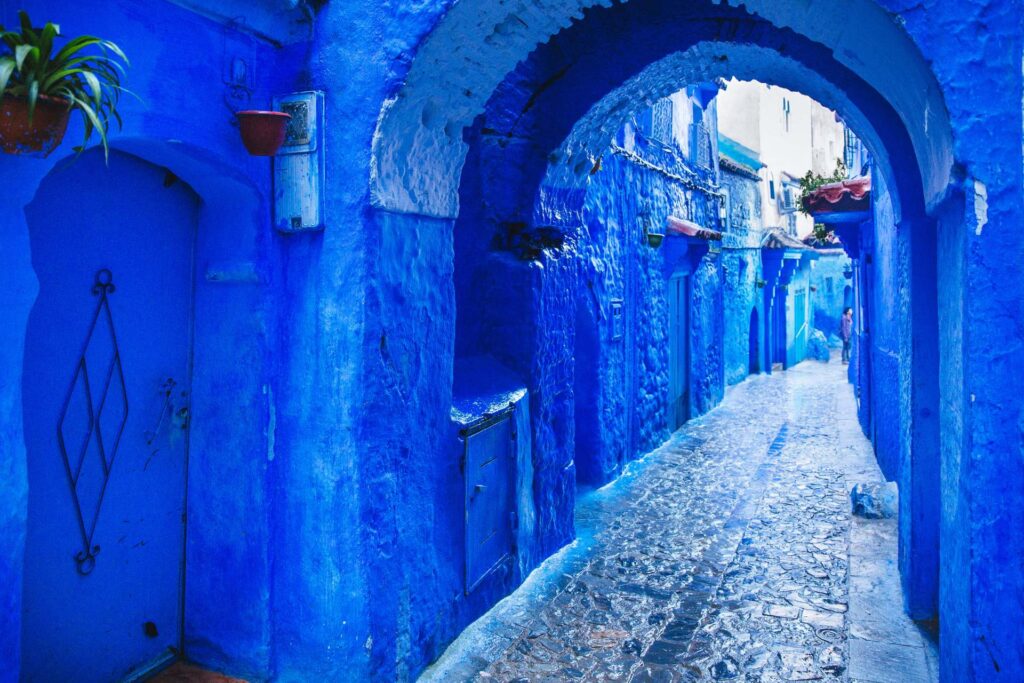
The Rif mountains fold around a sky-blue medina that slows your pace and sharpens photos. Chefchaouen is perfect for relaxed wandering and has small mountain-city life at every turn.
Chefchaouen’s blue lanes and sunset hikes
Wander painted alleys by day and stop for mint tea at a sunlit café. Hike up to the Spanish Mosque before sunset for panoramic views and golden light. Make sure you carry water and map your return route before dark. The compact medina feels safe and friendly, especially for women travelers seeking an easy pace.
Optional imperial loop: Meknes and Volubilis
Add Meknes for grand gates, quiet streets, and the Mausoleum of Moulay Ismail. It offers imperial-era culture without heavy crowds and makes a calm day trip base.
Nearby Volubilis showcases Roman mosaics, a triumphal arch, and olive presses. Use a local guide for context and clearer routes through the ruins.
Tip: Build in long lunches and tea breaks so the north becomes a true pause between big cities. This small loop gives a fresh window into regional culture and everyday life.
Getting the Most from Your Stay
A few simple checks before you confirm can change an average night into a great one. Start with booking channels and what each offers.
Where to book
Compare direct websites, Booking.com, and Airbnb listings. Booking.com often gives Genius discounts and easy cancellations. Direct bookings may include airport pickup or small perks.
Many medina Airbnb listings are actually rooms inside riads. Double-check photos and recent reviews so an “apartment” is not a single riad room.
Room essentials
Confirm heating or A/C and ask about hot water reliability. Temperatures swing widely by season, so verify pool usability if that matters.
For work, check Wi‑Fi speeds and desk space. Verify arrival logistics like luggage help through narrow lanes and check-in hours.
Breakfast to dinner
Ask what breakfast includes—fresh fruit, yogurt, msemen with honey, and mint tea are common. Many places offer set-menu dinner with local produce; it’s an easy, authentic evening.
Affiliate links and transparency
When you see affiliate links, know they support creators at no extra cost to you. Look for honest reviews and clear notes on any commissions.
Quick checklist:
Compare hotels across platforms, confirm room details, verify meal options, and note affiliate links for transparency.
Riad Etiquette, Culture, and Comfort Tips
A riad feels more like a lived-in home than a hotel, and a few simple habits make that charm easier to enjoy. Rooms vary in size and age, so expect quirks like creaky shutters, uneven floors, and charming tilework. Treat fixtures gently and let staff know if something needs attention.
Respecting heritage homes: creaky shutters, varied rooms, and shared spaces
These buildings are renovated heritage homes. Use shared courtyards with calm voices and modest dress. Both women and men should move respectfully in common areas. There’s a lot of character here—unique room shapes and original doors—that rewards careful use.
Sound and sleep: rooftop cats, street life, and packing earplugs
You will hear the call prayer several times a day and birds or rooftop cats at night. Pack earplugs if you are a light sleeper and ask for a quieter room away from street-facing doors if needed. Requesting directions or an escorted short walk is an easy way to reach taxi points and main gates.
Practical way to connect: accept tea on the terrace, greet staff, and learn a few Arabic or French phrases. That small effort deepens your link to local culture and makes your stay more rewarding.
Conclusion
Finish by choosing a few anchor nights that shape the rhythm of your trip. Pick medina riads for layered architecture and rooftop sunsets, a mountain lodge for High Atlas panoramas, and a desert camp for a starry night and dinner under the sky.
Plan time for food and tea breaks—msemen at breakfast, set-menu dinner with garden produce, and mint tea between walks. Confirm hot water, pool access, and arrival logistics so comfort supports curiosity from morning through night.
With a simple route—medina, high atlas, desert, coast—you’ll leave with fresh energy, lasting hospitality memories, and clear reasons to return.
FAQ
How do I choose lodging that matches my itinerary—medina, mountains, desert, or coast?
Match your base to what you want to do each day. Choose a central medina riad for easy access to souks, food, and history. Pick a lodge or Berber guesthouse in the High Atlas for hikes and olive groves. Book a desert camp or luxury tent near Merzouga for camel treks and starry nights. For beaches or modern conveniences, opt for Casablanca or Rabat hotels.
What’s the difference between a riad and a dar?
Both are traditional homes built around a courtyard, but a riad usually features a planted inner garden and is popular with visitors for its rooftop terraces and plunge pools. A dar is often more residential and smaller, with authentic interiors, cedar doors, and local craftsmanship like zellij tilework. Expect intimate hospitality and distinct architecture from either choice.
Are city hotels and apart-hotels a good option?
Yes. City hotels and apart-hotels—especially in Gueliz (Marrakesh’s new district)—offer modern conveniences: gyms, reliable Wi‑Fi, and easier commutes. They work well for digital nomads, families, and longer stays when you want a routine or quick access to cafes and coworking spaces.
What should I expect from a Berber lodge or mountain retreat?
Expect warm hospitality, simple yet tasteful interiors, and local meals sourced from the garden. Many lodges have pools, guided walks, weaving or riding activities, and hosts who introduce Berber culture. Rooms vary—ask about heating and hot water in cooler months.
How different are desert camps in Merzouga? Are there comforts like hot water?
Desert options range from basic nomadic tents to luxury camps. Luxury tents often include comfortable beds, hot showers, and evening meals under the stars after a camel trek. Basic camps may be rustic but memorable. Check facilities before booking if hot water, private bathrooms, or electricity matter to you.
Where should first-timers book their first nights?
First-timers do well in a central medina riad close to major sights, markets, and food. You’ll be within walking distance of historic sites and rooftop terraces for mint tea. This makes navigating the city and getting a feel for local life easier on day one.
Which Marrakesh neighborhoods suit different travel styles?
Kasbah is quieter and close to the Saadian Tombs and El Badi Palace. Mouassine is stylish and central for garden visits and souks. Bab Doukkala offers a local feel near Majorelle Garden. Mellah sits near Bahia Palace and Tinsmiths Square. Choose by vibe: quieter history, design-focused, or lively local streets.
Are there standout riads and where can I find rooftop dining and mint tea?
Many riads feature rooftop terraces for dinners and mint tea at sunrise or sunset. Look for well-reviewed properties with terrace dining and authentic breakfasts. Rooftop meals paired with views and the call to prayer create a memorable experience—ask hosts for their best local dishes.
How do I navigate Fes’s medina and choose a suitable riad?
Fes’s medina is vast with narrow lanes. Book near key sights like the Bou Inania or Al Attarine madrasa to reduce walking strain. Choose a riad with clear arrival instructions and help with luggage; many provide porters or meet-and-greet services to guide you through the maze.
Should I do day trips to the High Atlas or stay overnight?
Day trips work if you prefer a single guided experience, but overnight stays let you slow down, enjoy Berber hospitality, and fit activities—like weaving classes or trail walks—into the schedule. If you value clear skies and relaxed pace, choose an overnight lodge.
What’s the best way to break up long drives between the Sahara and the High Atlas?
Plan smart stops in towns like Tinghir or Todgha Gorge. Book a budget riad or a riverside guesthouse to rest, enjoy local meals, and take short hikes. Breaking journeys into two-day legs reduces fatigue and makes landscapes more enjoyable.
Are Casablanca and Rabat good bases for coastal and city visits?
Yes. Casablanca offers modern amenities and proximity to Hassan II Mosque, handy for travelers seeking convenience. Rabat provides a relaxed pace, Oudaya Kasbah walks, and sea views, ideal for cultural, lower‑crowd stays on the coast.
What should I expect from stays in Chefchaouen and the northern loop?
Chefchaouen is calm with photogenic blue lanes and mountain-backed riads. It’s perfect for relaxed walks and local eateries. Adding Meknes and Volubilis gives you quieter imperial sites with fewer crowds and rich Roman and Moroccan history.
Where’s the best place to book—direct, Booking.com, or Airbnb for riads?
Book direct for the best rates and personalised requests when possible. Booking.com offers ease and flexible cancellation. Airbnb lists private homes and some riads for longer stays. Compare rates and read recent guest reviews; many riads also answer special requests faster via email.
What room essentials should I confirm before booking?
Confirm heating or A/C for your travel season, reliable hot water, and pool access if included. Ask about noise from rooftops or streets and whether rooms have private bathrooms. These small checks make a big difference in comfort.
What food and meal expectations should I have—breakfast and dinner?
Breakfast often includes msemen, fresh bread, local jams, fruits, and mint tea. Dinner may be a set menu with garden-to-table produce, tagines, and seasonal salads. Many riads and lodges offer included breakfast and optional dinners—ask about dietary needs in advance.
How should I behave in riads and heritage homes—any etiquette tips?
Respect private rooms and communal courtyards, remove shoes where requested, and dress modestly in shared spaces. Be mindful of creaky shutters and varied room layouts. Hosts usually appreciate polite curiosity about history and architecture.
Any tips for dealing with street noise and sleep quality?
Pack earplugs and request a quieter room away from the main street or rooftop bar. Some riads have thick walls that muffle sound; others are lively. Confirm quiet hours with your host if you need uninterrupted sleep.
Do affiliate links affect recommendations and transparency?
Trusted guides often use affiliate links to support content creators. Reputable platforms disclose this clearly and still prioritize guest reviews, safety, and authenticity when recommending riads, lodges, and camps.